
Refrigerated Air Dryer – Complete Guide to Features, Benefits, Working Principle & Applications
Introduction
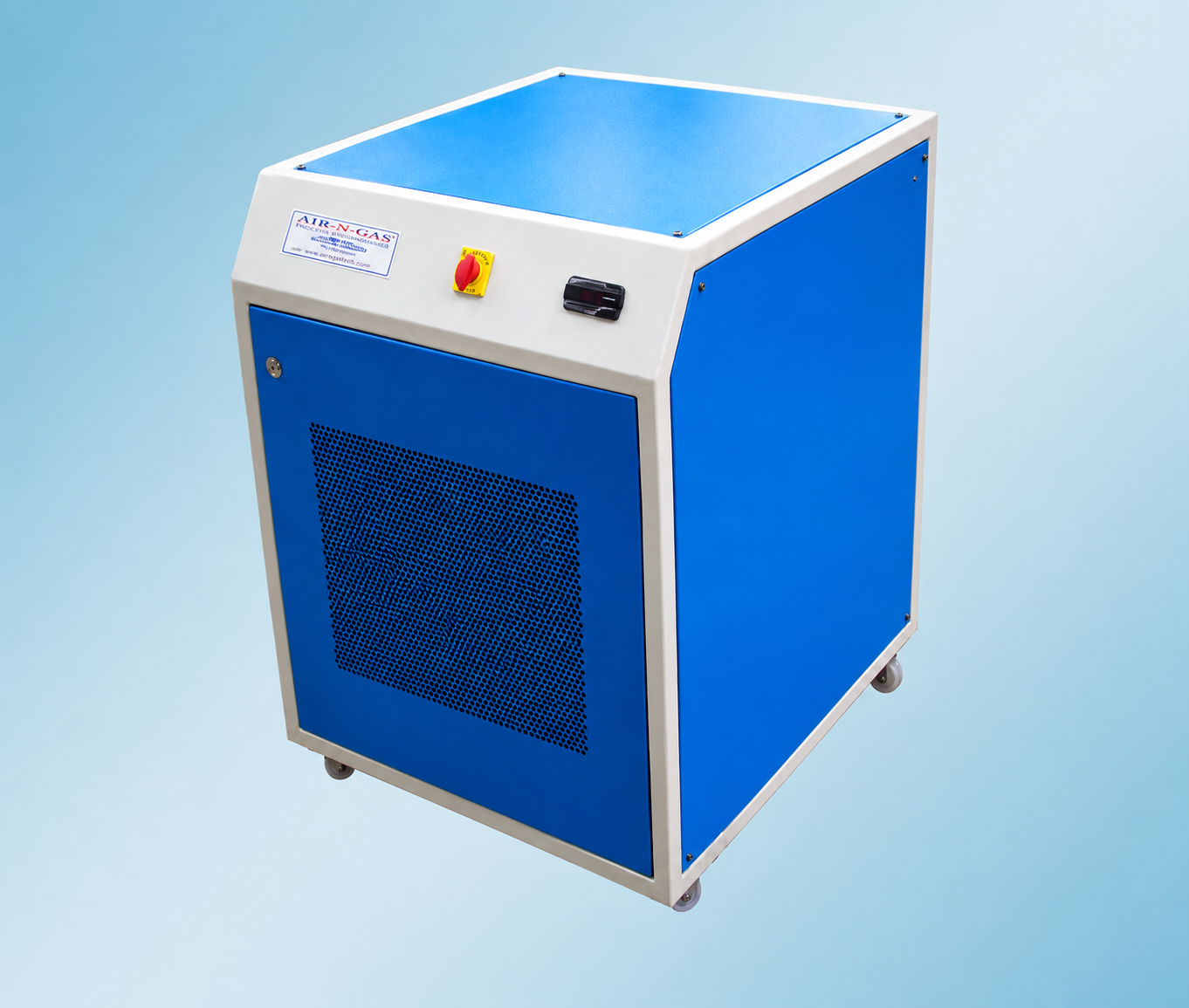
air-n-gas Compressed air plays an important role in manufacturing and industrial operations. However, untreated compressed air often contains moisture, oil vapors, and contaminants that can damage equipment, reduce efficiency, and affect product quality. A Refrigerated Air Dryer is designed to remove moisture from compressed air by cooling it to a low temperature, allowing water vapor to condense and separate before the air enters the production system.
This drying process helps maintain consistent air quality, protects pneumatic equipment, minimizes corrosion, and increases the lifespan of air compressors. Refrigerated Air Dryers are widely used across industries because they provide reliable performance, energy efficiency, and low maintenance costs.
Whether your facility operates CNC machines, packaging equipment, automotive systems, or food processing machinery, a Refrigerated Air Dryer ensures a clean, dry, and dependable compressed air supply.
Table of Contents
- Introduction
- What is a Refrigerated Air Dryer?
- Key Features
- Benefits of Using a Refrigerated Air Dryer
- How a Refrigerated Air Dryer Works
- Technical Specifications
- Applications
- Advantages Over Wet Compressed Air Systems
- Installation Guidelines
- Maintenance Tips
- How to Choose the Right Refrigerated Air Dryer
- Why Choose Our Refrigerated Air Dryer?
- Frequently Asked Questions
- Conclusion
What is a Refrigerated Air Dryer?
A Refrigerated Air Dryer is an industrial air treatment system that removes moisture from compressed air through refrigeration technology. The compressed air is cooled to approximately 3°C to 5°C, causing water vapor to condense into liquid. This moisture is then separated and drained, while clean and dry compressed air is supplied to the application.
The Refrigerated Air Dryer helps prevent rust, corrosion, pipeline blockage, and equipment failure, making it an essential component of any compressed air system.
Key Features
- High moisture removal efficiency
- Stable pressure dew point
- Compact and space-saving design
- Energy-efficient refrigeration system
- Corrosion-resistant construction
- Low maintenance requirements
- Automatic condensate drain
- Quiet operation
- Long service life
- Easy installation and operation
- Reliable performance for continuous industrial use
- Suitable for various compressor capacities
Benefits of Using a Refrigerated Air Dryer
Installing a Refrigerated Air Dryer offers several operational and financial benefits.
- Removes moisture from compressed air
- Protects pneumatic equipment
- Prevents rust inside pipelines
- Reduces maintenance costs
- Improves machine reliability
- Enhances product quality
- Increases compressor efficiency
- Extends equipment lifespan
- Minimizes production downtime
- Delivers consistent compressed air quality
- Saves operational costs over time
How a Refrigerated Air Dryer Works
A Refrigerated Air Dryer follows a simple yet effective process.
Step 1 – Warm Compressed Air Enters
Hot compressed air from the air compressor enters the dryer.
Step 2 – Heat Exchange
The incoming air passes through a heat exchanger where it is pre-cooled.
Step 3 – Refrigeration Cooling
The refrigeration system cools the compressed air to approximately 3°C.
Step 4 – Moisture Condensation
As the temperature decreases, water vapor changes into liquid droplets.
Step 5 – Moisture Separation
A moisture separator removes condensed water from the airflow.
Step 6 – Automatic Drain
Collected water is discharged through an automatic drain valve.
Step 7 – Dry Air Delivery
Clean, dry compressed air exits the Refrigerated Air Dryer and enters the air distribution system.
Technical Specifications
| Specification | Details |
|---|---|
| Product Name | Refrigerated Air Dryer |
| Drying Method | Refrigeration Cooling |
| Dew Point | Approximately 3°C to 5°C |
| Cooling System | Refrigeration Compressor |
| Moisture Removal | High Efficiency |
| Operating Pressure | Standard Industrial Range |
| Installation | Indoor |
| Construction | Heavy Duty Steel Body |
| Drain System | Automatic |
| Maintenance | Low Maintenance |
| Operation | Continuous Industrial Duty |
Applications
A Refrigerated Air Dryer is widely used in many industries.
- Manufacturing Industries
- Automotive Plants
- CNC Machine Shops
- Textile Industry
- Pharmaceutical Industry
- Food Processing Plants
- Chemical Industry
- Plastic Manufacturing
- Printing Industry
- Packaging Industry
- Electronics Manufacturing
- Engineering Workshops
- Metal Fabrication
- Industrial Automation
- Pneumatic Systems
Advantages Over Wet Compressed Air Systems
Using untreated compressed air can lead to moisture-related problems. A Refrigerated Air Dryer offers significant improvements.
| Without Refrigerated Air Dryer | With Refrigerated Air Dryer |
|---|---|
| Moisture in pipelines | Dry compressed air |
| Rust formation | Corrosion protection |
| Frequent equipment failure | Improved equipment life |
| High maintenance cost | Reduced maintenance |
| Poor air quality | Clean compressed air |
| Product contamination | Better product quality |
| Increased downtime | Reliable operation |
Installation Guidelines
Proper installation ensures maximum efficiency.
- Install in a clean and ventilated area.
- Keep sufficient clearance around the machine.
- Connect to the compressed air line correctly.
- Ensure proper drainage for condensate.
- Use recommended operating pressure.
- Maintain ambient temperature within limits.
- Follow manufacturer installation instructions.
Maintenance Tips
Regular maintenance keeps the Refrigerated Air Dryer performing efficiently.
- Clean air filters regularly.
- Inspect refrigerant system periodically.
- Check automatic drain operation.
- Monitor pressure drop.
- Clean condenser coils.
- Inspect electrical connections.
- Replace worn components when necessary.
- Schedule preventive maintenance.
How to Choose the Right Refrigerated Air Dryer
Selecting the right Refrigerated Air Dryer depends on several factors.
- Air compressor capacity
- Required airflow
- Working pressure
- Desired pressure dew point
- Ambient temperature
- Available installation space
- Energy efficiency requirements
- Future expansion plans
- Maintenance requirements
- Application type
Why Choose Our Refrigerated Air Dryer?
Our Refrigerated Air Dryer is designed for reliable industrial performance. It provides efficient moisture removal, consistent compressed air quality, and dependable operation with minimal maintenance. Built using quality components, the system delivers excellent energy efficiency and long-term durability, making it suitable for demanding industrial environments.
Frequently Asked Questions
What is the purpose of a Refrigerated Air Dryer?
A Refrigerated Air Dryer removes moisture from compressed air to protect industrial equipment and improve air quality.
What temperature does a Refrigerated Air Dryer operate at?
Most Refrigerated Air Dryers cool compressed air to approximately 3°C to 5°C pressure dew point.
Which industries use Refrigerated Air Dryers?
Manufacturing, automotive, pharmaceutical, food processing, textile, packaging, electronics, engineering, and chemical industries commonly use Refrigerated Air Dryers.
Does a Refrigerated Air Dryer reduce maintenance costs?
Yes. By removing moisture, it helps prevent corrosion, equipment damage, and unexpected breakdowns, reducing maintenance expenses.
Is a Refrigerated Air Dryer energy efficient?
Modern Refrigerated Air Dryers are designed with energy-saving refrigeration systems that provide efficient drying with lower operating costs.
How often should maintenance be performed?
Routine inspections, filter cleaning, drain checks, and preventive servicing should be carried out according to operating conditions and manufacturer recommendations.
Can a Refrigerated Air Dryer be used with any air compressor?
Yes, provided the Refrigerated Air Dryer is properly sized according to the compressor's airflow and operating pressure.
Why is moisture removal important in compressed air?
Moisture can cause corrosion, equipment failure, product contamination, and reduced system efficiency. Removing moisture improves reliability and protects machinery.
Conclusion
A Refrigerated Air Dryer is an essential component of any industrial compressed air system. By efficiently removing moisture, it protects equipment, prevents corrosion, improves production quality, and enhances overall operational efficiency. With its reliable performance, low maintenance requirements, and energy-efficient design, a Refrigerated Air Dryer provides a cost-effective solution for delivering clean and dry compressed air across a wide range of industrial applications. Choosing the right Refrigerated Air Dryer ensures long-term equipment protection, improved productivity, and dependable performance for your business.