
PSA Oxygen Plant
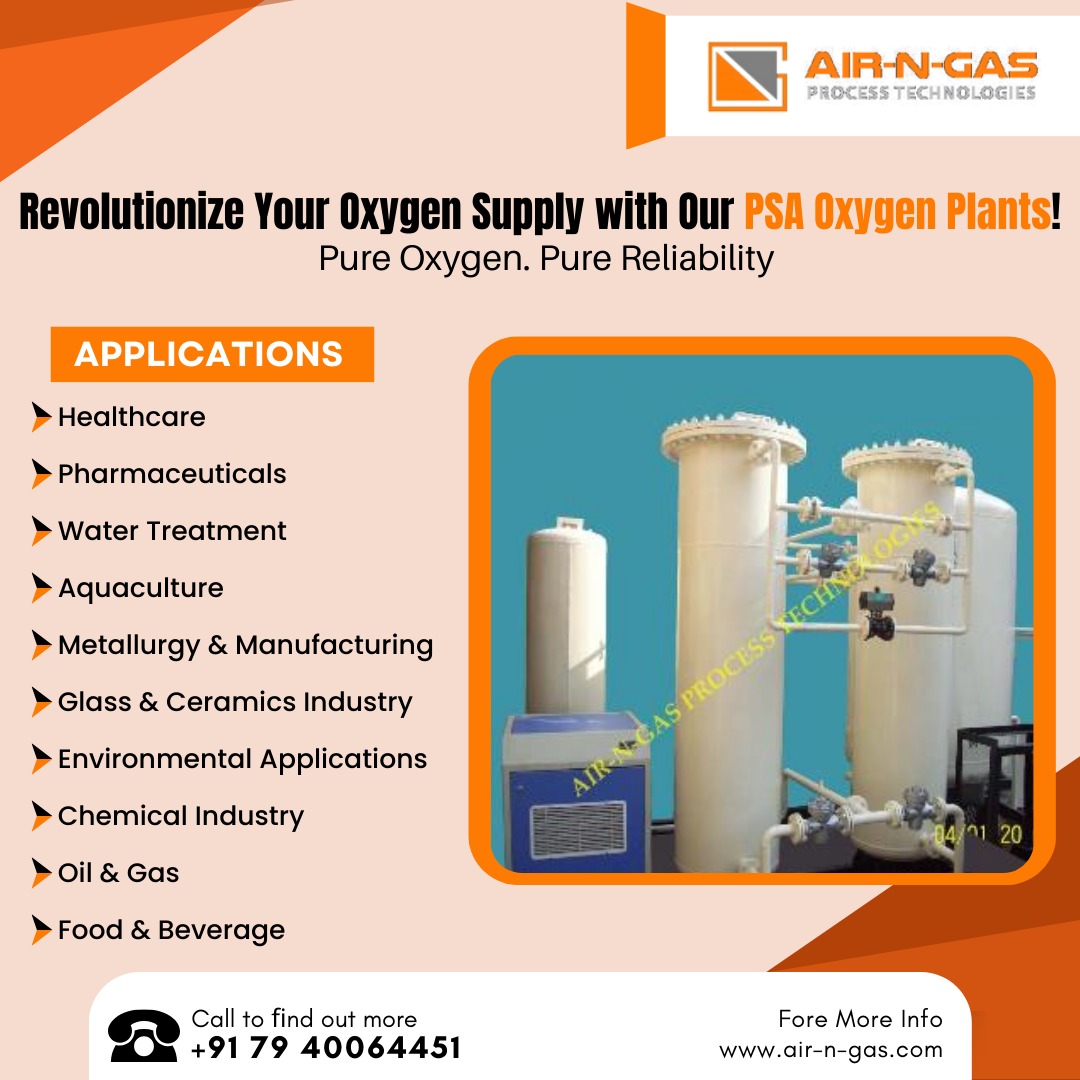
PSA Oxygen Plant: Complete Guide for Medical and Industrial Use
What is a PSA Oxygen Plant?
A PSA Oxygen Plant is a cutting-edge system designed to generate oxygen on-site using Pressure Swing Adsorption (PSA) technology. It is widely used in medical facilities, industrial operations, and emergency setups due to its efficiency, reliability, and cost-effectiveness. The PSA oxygen plant separates oxygen from atmospheric air and delivers high-purity oxygen for diverse applications.
How Does Pressure Swing Adsorption (PSA) Work?
The PSA process involves using a Zeolite Molecular Sieve that selectively adsorbs nitrogen from the air, allowing oxygen to pass through. The adsorbed nitrogen is then released by lowering the pressure in the adsorption chamber, regenerating the sieve material. This cyclic process ensures a continuous supply of high-purity oxygen.
Psa Nitrogen Plant
Medical Oxygen Generator
Bio Gas Dryer
Advantages of Using a PSA Oxygen Generator
- Continuous oxygen supply without relying on cylinders
- High oxygen purity up to 95%
- On-site and scalable solution
- Lower operational costs
- Eco-friendly and energy-efficient
Zeolite Molecular Sieve: The Core of PSA Technology
Zeolite is a microporous mineral with high selectivity for nitrogen molecules. It acts as a filter during the PSA process, capturing nitrogen while allowing oxygen to flow through. The performance of the PSA system heavily depends on the quality and regeneration ability of the zeolite used.
PSA Oxygen Plant vs. Air Separation Unit (ASU)
Unlike ASUs, which are cryogenic and used for large-scale oxygen production, PSA systems are non-cryogenic and suitable for small to medium operations. ASUs are more complex and expensive to operate, whereas PSA systems are compact, affordable, and ideal for decentralized use such as hospitals and workshops.
Applications of PSA Oxygen Plants
Medical Oxygen Plant
Hospitals use PSA oxygen plants to ensure an uninterrupted supply of medical-grade oxygen, especially in ICUs and operation theaters. These systems gained importance during the COVID-19 pandemic for life-saving respiratory support.
Industrial Oxygen Supply
Industries use PSA oxygen for welding, glass manufacturing, steel processing, and chemical oxidation. Its high purity and cost-effectiveness make it a preferred choice over traditional oxygen cylinders.
Oxygen for Welding
Welding and cutting applications require oxygen with consistent purity. PSA systems ensure this without the risk of delays or inconsistencies associated with refilled cylinders.
On-site Oxygen Generation: The Future of Oxygen Supply
With growing demand for autonomy and sustainability, on-site oxygen generation using PSA is becoming mainstream. It reduces logistics, ensures safety, and guarantees oxygen availability even in remote or underdeveloped areas.
FAQs About PSA Oxygen Plant
1. What is the typical oxygen purity from a PSA Oxygen Plant?
PSA systems can generate oxygen with 90–95% purity, which is suitable for most medical and industrial uses.
2. How does a PSA Oxygen Plant differ from an ASU?
PSA technology is ideal for on-site, small to medium-scale use, while ASUs are cryogenic systems designed for large-scale oxygen production.
3. What maintenance is required?
Maintenance includes regular filter replacement, monitoring zeolite performance, and compressor servicing for optimal plant efficiency.
4. Can it be used in remote hospitals?
Yes. PSA oxygen plants are compact and do not require complex infrastructure, making them ideal for remote or rural healthcare settings.
5. Is PSA oxygen suitable for welding?
Absolutely. PSA plants deliver a stable and high-purity oxygen stream needed for welding and metal cutting applications.