
Medical Oxygen Generator
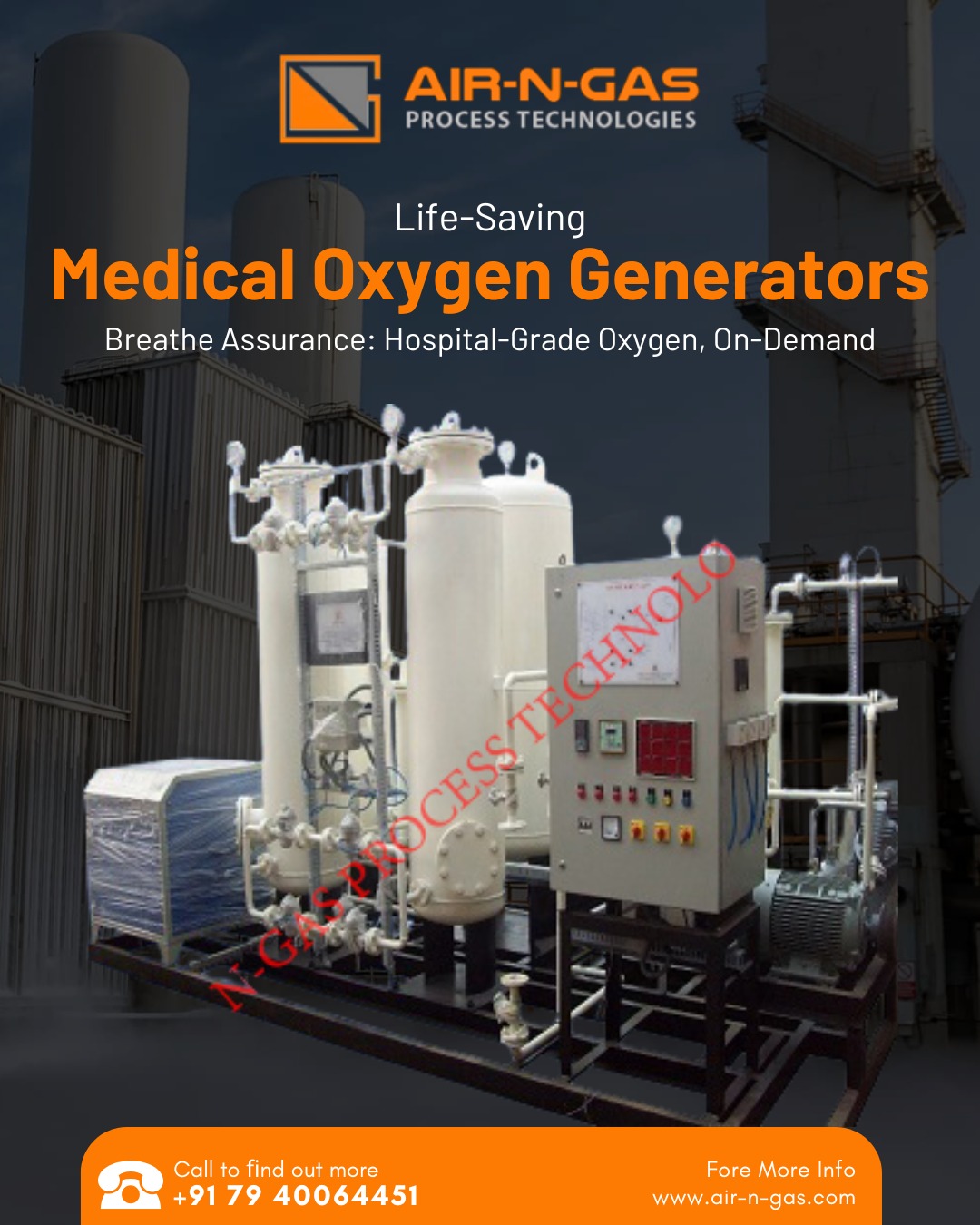
Medical Oxygen Generator: The Backbone of Modern Healthcare
Medical Oxygen Generators are revolutionizing healthcare by providing reliable, cost-effective, and eco-friendly oxygen supply solutions. This in-depth guide covers how they work, their benefits, and why they’re essential for hospitals and clinics.
What is a Medical Oxygen Generator?
A Medical Oxygen Generator extracts oxygen from ambient air and delivers it at high purity levels (90%–95%) suitable for medical use. It eliminates dependency on traditional cylinders and liquid oxygen tanks by generating oxygen on-site using Pressure Swing Adsorption (PSA) technology.
How Does PSA Technology Work?
PSA technology separates nitrogen from oxygen using zeolite. Here’s a step-by-step breakdown:
- Compressed ambient air is filtered.
- Air passes through zeolite-filled adsorption vessels.
- Zeolite captures nitrogen; oxygen passes through.
- Oxygen is stored in a tank.
- The process cycles continuously in twin vessels.
Oxygen Concentrator vs. Medical Oxygen Generator
Oxygen concentrators are for home use (up to 10 LPM), while medical oxygen generators serve entire hospitals with scalable capacities (10–100+ LPM). Generators are more efficient, cost-effective, and suitable for institutional use.
Importance of Oxygen Purity in Healthcare
Medical oxygen must maintain purity levels between 90% and 95%. Built-in sensors and alarms in generators ensure consistent quality and alert users if purity falls below safe thresholds.
Understanding Oxygen Flow Rate
Oxygen flow rate refers to the liters per minute (LPM) delivered. Facilities differ in requirements:
- Small clinics: 5–10 LPM
- Mid-sized hospitals: 50–100 LPM
- Large hospitals: 100+ LPM
Modern generators offer scalable flow rates to meet growing demands.
Features of an Oxygen Generator Machine
- Air Compressor: Compresses atmospheric air.
- Filters: Remove contaminants.
- PSA Towers: Separate nitrogen via zeolite.
- Oxygen Storage Tank: Stores purified oxygen.
- Flow Meters & Alarms: Monitor and manage delivery.
Industrial vs. Medical Oxygen Generator
Industrial oxygen generators are used in manufacturing and don't meet the strict purity and safety standards of medical units. Medical-grade systems ensure regulatory compliance and patient safety.
Oxygen Cylinder Filling Plant Integration
Medical oxygen generators can be linked with cylinder filling plants to allow on-site refilling. Benefits include:
- Reduced reliance on suppliers
- Preparedness during emergencies
- Efficient and timely cylinder filling
Advantages of Medical Oxygen Generators
- Cost-Efficient: Lower operational costs over time.
- Reliable: Continuous oxygen supply.
- Safe: Reduced cylinder handling risks.
- Eco-Friendly: No transport emissions.
- Scalable: Grows with your facility’s needs.
Who Should Use a Medical Oxygen Generator?
Ideal for:
- Hospitals & Clinics
- Emergency Medical Services
- Mobile Health Units
- Veterinary Clinics
- Nursing Homes
- Remote Medical Outposts
FAQs About Medical Oxygen Generators
- What is a medical oxygen generator used for?
- To generate high-purity oxygen on-site in healthcare settings.
- How does PSA technology work?
- It separates nitrogen from oxygen using zeolite, ensuring purity levels of 90–95%.
- What’s the difference between a concentrator and a generator?
- Concentrators are for personal use, while generators serve entire healthcare facilities.
- Can medical generators fill cylinders?
- Yes, when integrated with a filling station.
- What is a typical flow rate?
- From 10 LPM to 100+ LPM, depending on hospital size.