
Low Pressure Dryer: 7 Powerful Benefits for Efficient Industrial Moisture Removal
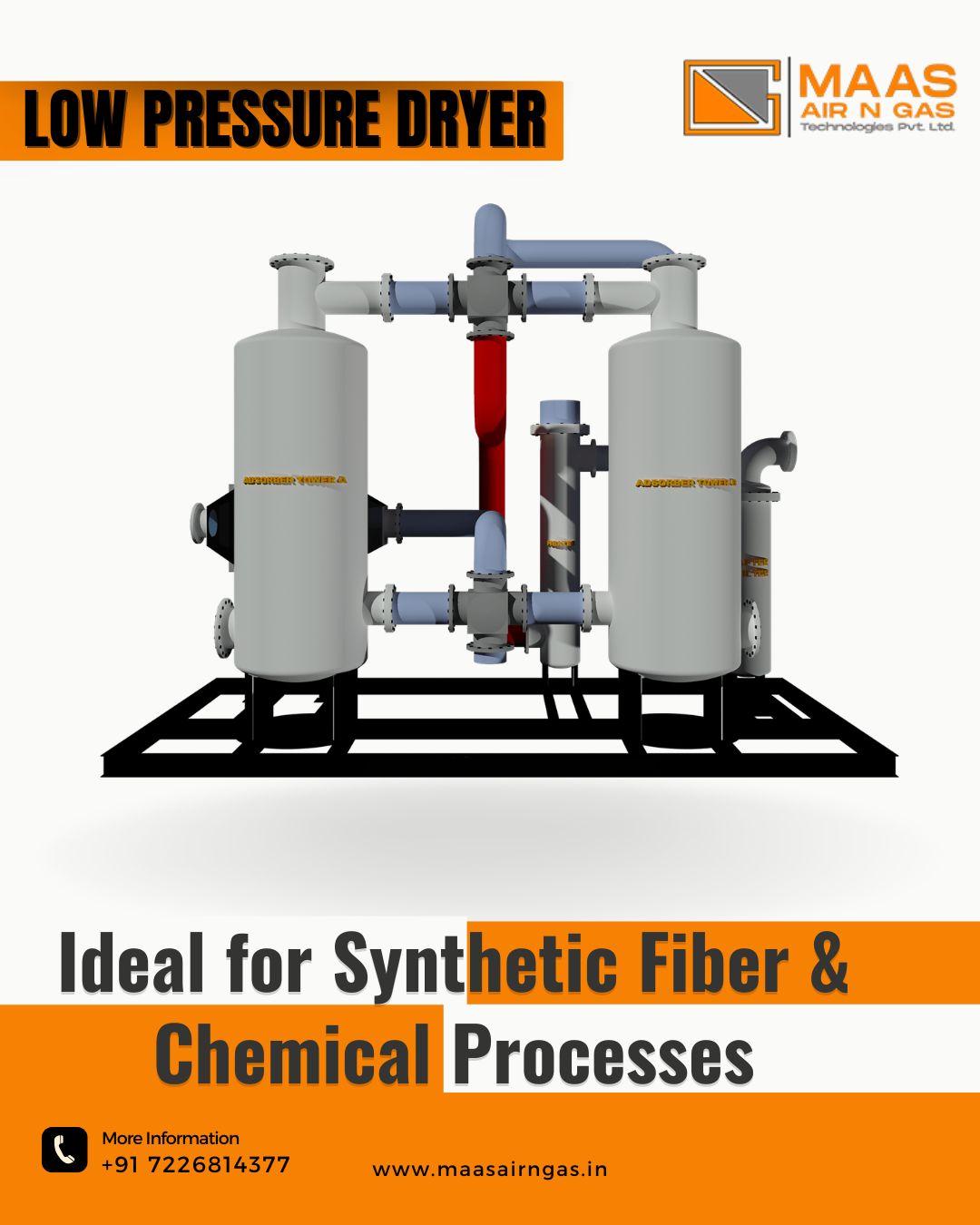
Table of Contents
- What is a Low-Pressure Dryer?
- How a Low-Pressure Dryer Works
- Key Benefits of Using a Low-Pressure Dryer
- Applications of Low-Pressure Dryer Systems
- Why Choose Air N Gas for Low-Pressure Dryer Solutions?
- FAQ About Low-Pressure Dryer
- Conclusion
Low-Pressure Dryer: The Complete Guide for Industrial Moisture Removal
Low-pressure dryer technology plays a critical role in modern industrial operations where moisture-free air and gas streams are essential for maintaining product quality, operational efficiency, and equipment reliability. Industries involved in synthetic fiber production, chemical manufacturing, petrochemical processing, and specialty gas handling depend heavily on advanced drying systems to ensure uninterrupted performance and consistent output quality.
In many industrial environments, even small amounts of moisture can create serious challenges. Water vapor present in compressed air or process gases can lead to corrosion, pipeline deterioration, product contamination, catalyst degradation, and equipment malfunction. These issues often result in increased maintenance expenses, production losses, and reduced plant efficiency. A properly designed Low Pressure Dryer eliminates these concerns by delivering dry air and gases that meet stringent industrial requirements.
What is a Low-Pressure Dryer?
A Low-Pressure Dryer is an advanced moisture removal system specifically engineered to remove water vapor from compressed air or industrial gases operating at relatively low pressure levels. The system typically utilizes adsorption technology, where moisture molecules are trapped by specialized desiccant materials, ensuring a continuous supply of dry process gas.
Unlike conventional drying systems that may consume excessive energy or require complex operating conditions, modern Low Pressure Dryer systems are designed to maximize efficiency while minimizing operational costs. These systems provide stable dew points and dependable performance even in demanding industrial applications.
Industries handling sensitive processes require consistent moisture control because variations in humidity can directly affect product quality. This makes a low-pressure dryer an indispensable component in many manufacturing facilities.
How a Low-Pressure Dryer Works
The operating principle of a Low-Pressure Dryer is based on adsorption technology. Wet process air enters the adsorption vessel containing high-performance desiccant material. As the air passes through the desiccant bed, moisture molecules are captured while dry air exits the system for industrial use.
Most industrial low-pressure dryer systems utilize twin-tower designs. While one tower actively dries the incoming air, the second tower undergoes regeneration. This alternating process ensures a continuous supply of dry air without interruption.
The regeneration cycle removes accumulated moisture from the desiccant material, restoring its drying capacity and ensuring long-term operational reliability. This design significantly improves energy efficiency and extends equipment life.
Key Benefits of Using a Low-Pressure Dryer
A low-pressure dryer offers several advantages that make it an essential investment for industries seeking reliable moisture control.
One of the primary benefits is enhanced product quality. In industries such as synthetic fiber manufacturing and chemical processing, moisture contamination can negatively impact final product characteristics. A low-pressure dryer ensures process consistency and helps maintain strict quality standards.
Another major advantage is reduced equipment corrosion. Moisture is one of the leading causes of pipeline damage and equipment degradation. By eliminating water vapor, a low-pressure dryer helps extend the lifespan of critical assets and reduces maintenance requirements.
Energy efficiency is also a significant factor. Modern Low-Pressure Dryer systems are engineered to optimize airflow and regeneration cycles, reducing overall energy consumption while maintaining superior drying performance.
Improved process reliability is another key benefit. Moisture-free air minimizes production disruptions, decreases downtime, and supports continuous operation across industrial facilities.
Applications of Low-Pressure Dryer Systems
The versatility of a Low-Pressure Dryer makes it suitable for a wide range of industries and applications.
In synthetic fiber manufacturing, moisture control is critical to maintaining fiber strength, consistency, and quality. A Low Pressure Dryer provides the dry process air necessary for efficient production.
Chemical processing plants use low-pressure dryer systems to protect sensitive reactions and prevent contamination caused by moisture. Dry process gases help improve reaction efficiency and product purity.
Petrochemical facilities rely on Low Pressure Dryer technology to safeguard equipment and maintain optimal process conditions. Removing moisture reduces the risk of corrosion and operational inefficiencies.
Pharmaceutical manufacturers use dry compressed air to maintain product integrity and comply with strict regulatory standards. A Low Pressure Dryer helps achieve the required air quality levels.
Food processing facilities also benefit from moisture-free compressed air, which helps protect products from contamination and supports hygienic production environments.
For additional technical information regarding compressed air systems and industrial efficiency, manufacturers and engineers can refer to the resources available from the U.S. Department of Energy: https://www.energy.gov/
Why Choose Air N Gas for Low-Pressure Dryer Solutions?
When selecting a low-pressure dryer, choosing the right manufacturer is just as important as selecting the equipment itself. Air N Gas has established itself as a trusted provider of advanced gas generation, purification, and drying solutions for industries worldwide.
The company focuses on delivering innovative drying systems that combine efficiency, durability, and performance. Every Low-Pressure Dryer is designed using high-quality components and advanced engineering principles to ensure reliable operation under demanding industrial conditions.
Air N Gas provides customized solutions tailored to specific industry requirements. Whether the application involves synthetic fiber manufacturing, chemical processing, petrochemical operations, or specialty gas systems, the company offers drying solutions designed to meet exact process needs.
The commitment to quality, technical expertise, and customer support has made Air N Gas a preferred choice among industrial clients seeking dependable moisture removal solutions.
For more industrial gas treatment solutions, visit the internal resource page:
https://www.air-n-gas.com/
Conclusion
Low-pressure dryer technology is an essential component in industries where moisture-free air and gas streams are required for efficient and reliable operations. By removing water vapor, improving product quality, protecting equipment, and reducing maintenance costs, a Low Pressure Dryer delivers long-term operational and financial benefits.
Industries such as synthetic fiber manufacturing, chemical processing, petrochemicals, pharmaceuticals, and food processing increasingly rely on advanced low-pressure dryer systems to achieve consistent performance and maintain competitive production standards. With its expertise in industrial gas solutions, Air N Gas provides high-performance Low Pressure Dryer systems designed to meet the evolving needs of modern industry.