
Heat of Compression Dryers: 7 Powerful Benefits of an Energy-Efficient Solution for Ultra-Dry Air
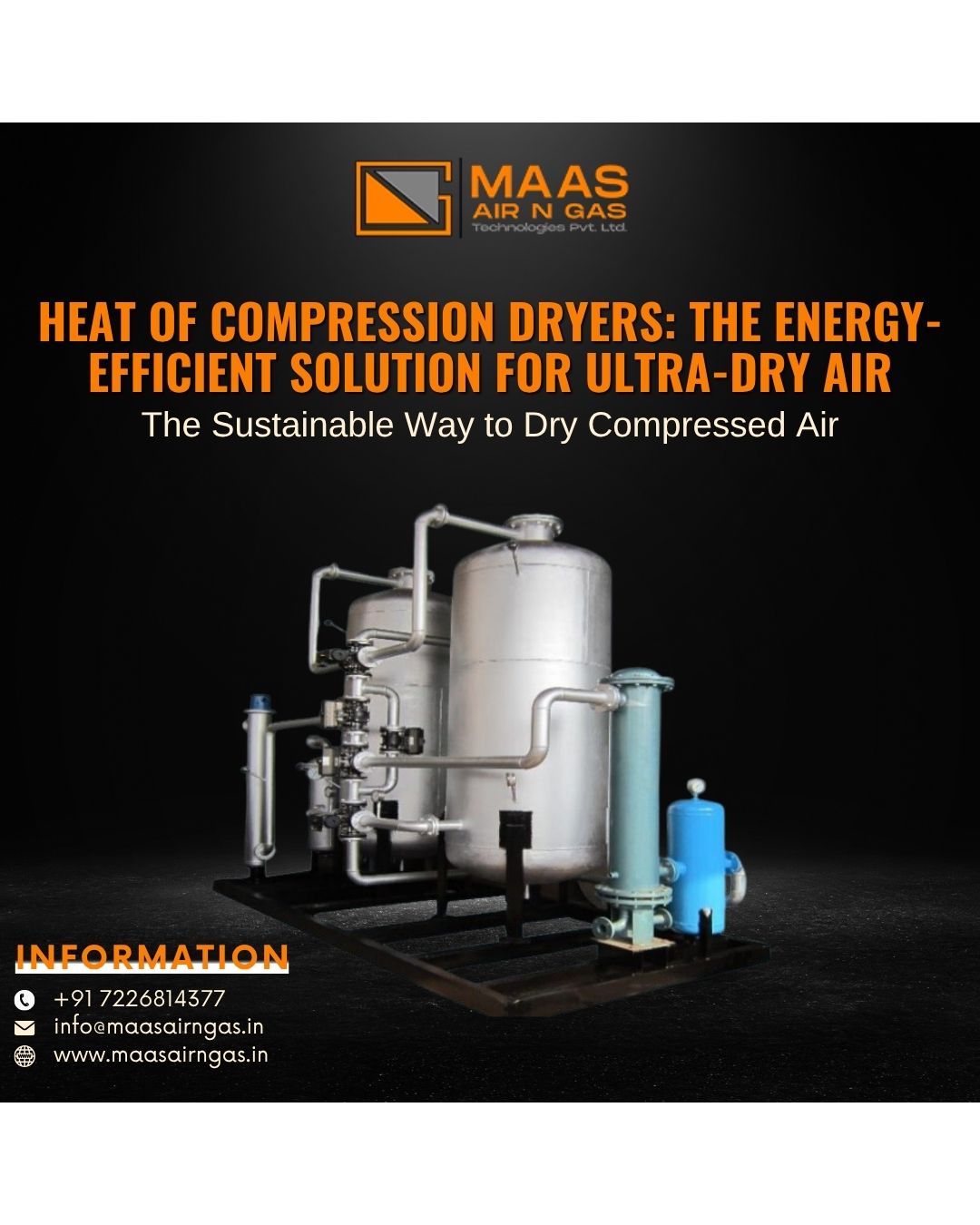
Heat of Compression Dryers: The Smart and Sustainable Choice for Ultra-Dry Compressed Air
Table of Contents
- What Are Heat of Compression Dryers?
- How Heat of Compression Dryers Work
- Benefits of Heat of Compression Dryers
- Applications Across Industries
- Why Industries Are Switching to Heat of Compression Dryers
- Why Choose Air N Gas?
- Frequently Asked Questions (FAQs)
- Conclusion
Heat of Compression Dryers: The Future of Energy-Efficient Compressed Air Drying
Heat of Compression Dryers are rapidly becoming the preferred choice for industries seeking an energy-efficient, cost-effective, and sustainable method of producing ultra-dry compressed air. In modern manufacturing environments, compressed air quality directly affects production efficiency, product quality, equipment reliability, and operational costs. Moisture present in compressed air can lead to corrosion, contamination, equipment damage, and product defects, making efficient air drying an essential requirement.
Traditional desiccant dryers often rely on external heaters or purge air, which increases energy consumption and operating expenses. In contrast, Heat of Compression Dryers utilize the heat naturally generated during the air compression process. Instead of wasting this heat, the dryer recovers and uses it for desiccant regeneration, significantly reducing energy requirements while maintaining exceptional drying performance.
As industries continue to focus on sustainability and energy savings, Heat of Compression Dryers have emerged as a highly efficient alternative capable of delivering reliable dew point performance with minimal operating costs.
What Are Heat of Compression Dryers?
Heat of Compression Dryers are advanced desiccant air dryers specifically designed to use the heat generated by oil-free air compressors for desiccant regeneration. During the compression process, air temperature rises substantially. Instead of dissipating this thermal energy into the atmosphere, the dryer captures and utilizes it to regenerate the desiccant bed.
This innovative approach eliminates or drastically reduces the need for external heating sources and minimizes compressed air losses associated with conventional regenerative dryers.
The result is a highly efficient compressed air drying system capable of achieving low-pressure dew points while reducing overall energy consumption.
How Heat of Compression Dryers Work
The operating principle of Heat of Compression Dryers is based on energy recovery. Hot compressed air leaving the compressor enters one desiccant tower where moisture is removed. Simultaneously, a portion of the hot compressed air is directed through another desiccant bed undergoing regeneration.
The high temperature of the compressed air effectively removes accumulated moisture from the desiccant material. After regeneration, the desiccant bed cools and becomes ready for the next drying cycle.
Because the system utilizes heat already produced by the compressor, energy that would otherwise be wasted is transformed into useful drying power.
For detailed compressed air efficiency guidelines, industries can refer to the U.S. Department of Energy:
Benefits of Heat of Compression Dryers
Reduced Energy Consumption
One of the most significant advantages of Heat of Compression Dryers is their ability to operate with minimal additional energy input. Since compressor-generated heat is used for desiccant regeneration, operating costs are substantially reduced.
Lower Lifecycle Costs
Organizations investing in Heat of Compression Dryers often experience lower maintenance expenses and reduced energy bills throughout the equipment lifecycle. These savings contribute to a faster return on investment.
Environmentally Friendly Operation
Energy-efficient equipment helps reduce carbon emissions and supports sustainability goals. Heat of Compression Dryers contribute to greener manufacturing operations by maximizing energy utilization.
Consistent Ultra-Dry Air
Industries requiring critical air quality standards benefit from reliable dew point performance. The dryer consistently removes moisture, protecting equipment and ensuring product quality.
Reduced Compressed Air Loss
Traditional heatless dryers consume valuable compressed air during regeneration. Heat of Compression Dryers significantly reduce or eliminate purge air losses, improving overall system efficiency.
Improved Equipment Protection
Moisture can damage pneumatic tools, valves, actuators, and production equipment. By maintaining dry compressed air, Heat of Compression Dryers help extend equipment life and reduce downtime.
Increased System Reliability
Stable drying performance contributes to uninterrupted operations, improved productivity, and reduced maintenance interventions.
Applications Across Industries
The versatility of Heat of Compression Dryers makes them suitable for numerous industrial sectors.
Pharmaceutical Industry
Pharmaceutical manufacturing requires clean and dry compressed air to maintain product integrity and comply with stringent quality standards.
Food and Beverage Industry
Moisture-free compressed air helps prevent contamination and supports hygienic production processes.
Electronics Manufacturing
Sensitive electronic components require extremely dry compressed air to avoid moisture-related defects.
Chemical Processing
Reliable compressed air quality is essential for process control and equipment protection in chemical plants.
Automotive Manufacturing
Automotive facilities use compressed air extensively in painting, assembly, and automation systems where moisture control is critical.
Textile Industry
Dry compressed air ensures consistent operation of textile machinery and helps maintain product quality.
Why Industries Are Switching to Heat of Compression Dryers
Increasing energy costs have forced manufacturers to seek solutions that deliver measurable operational savings. Heat of Compression Dryers address this challenge by utilizing an otherwise wasted energy source.
In addition to reducing energy consumption, these dryers support corporate sustainability initiatives and environmental compliance objectives. Their ability to provide reliable dew point performance while lowering operational expenses makes them a preferred choice for modern industrial facilities.
According to compressed air industry best practices published by the U.S. government and energy efficiency organizations, recovering waste heat is among the most effective methods for reducing industrial energy costs.
Why Choose Air N Gas?
When selecting a compressed air drying solution, expertise and product quality matter. Air N Gas offers advanced Heat of Compression Dryers designed to maximize energy savings while delivering dependable drying performance.
Key reasons industries trust Air N Gas include:
- High-quality engineering and manufacturing standards.
- Energy-efficient dryer designs.
- Reliable performance for demanding industrial applications.
- Customized solutions based on plant requirements.
- Strong technical support and after-sales service.
- Focus on sustainability and operational efficiency.
For more information, visit:
Air N Gas continues to help industries improve compressed air quality while reducing operating costs through innovative drying technologies.
Frequently Asked Questions (FAQs)
What is a Heat of Compression Dryer?
A Heat of Compression Dryer is a desiccant air dryer that uses the heat generated during air compression to regenerate the desiccant material, reducing energy consumption.
How energy efficient are Heat of Compression Dryers?
Heat of Compression Dryers are among the most energy-efficient desiccant drying technologies because they utilize waste heat from the compressor instead of relying on external heaters.
What industries use Heat of Compression Dryers?
Industries such as pharmaceuticals, food processing, electronics, chemicals, automotive manufacturing, and textiles commonly use Heat of Compression Dryers.
Do Heat of Compression Dryers reduce operating costs?
Yes. By minimizing external energy requirements and reducing purge air losses, Heat of Compression Dryers significantly lower operational expenses.
Can Heat of Compression Dryers provide ultra-dry air?
Yes. They are capable of delivering very low-pressure dew points required for critical industrial applications.
Conclusion
Heat of Compression Dryers represent one of the most advanced and energy-efficient compressed air drying technologies available today. By utilizing compressor-generated heat for desiccant regeneration, these systems dramatically reduce energy consumption, lower operating costs, and support sustainable industrial operations. Their ability to provide reliable ultra-dry compressed air while maximizing energy recovery makes them an ideal solution for industries seeking long-term efficiency and performance. Organizations looking to enhance compressed air quality, reduce environmental impact, and improve profitability should strongly consider investing in Heat of Compression Dryers from Air N Gas.