
Bio Gas to CNG Technology: Transforming Organic Waste into Clean Energy
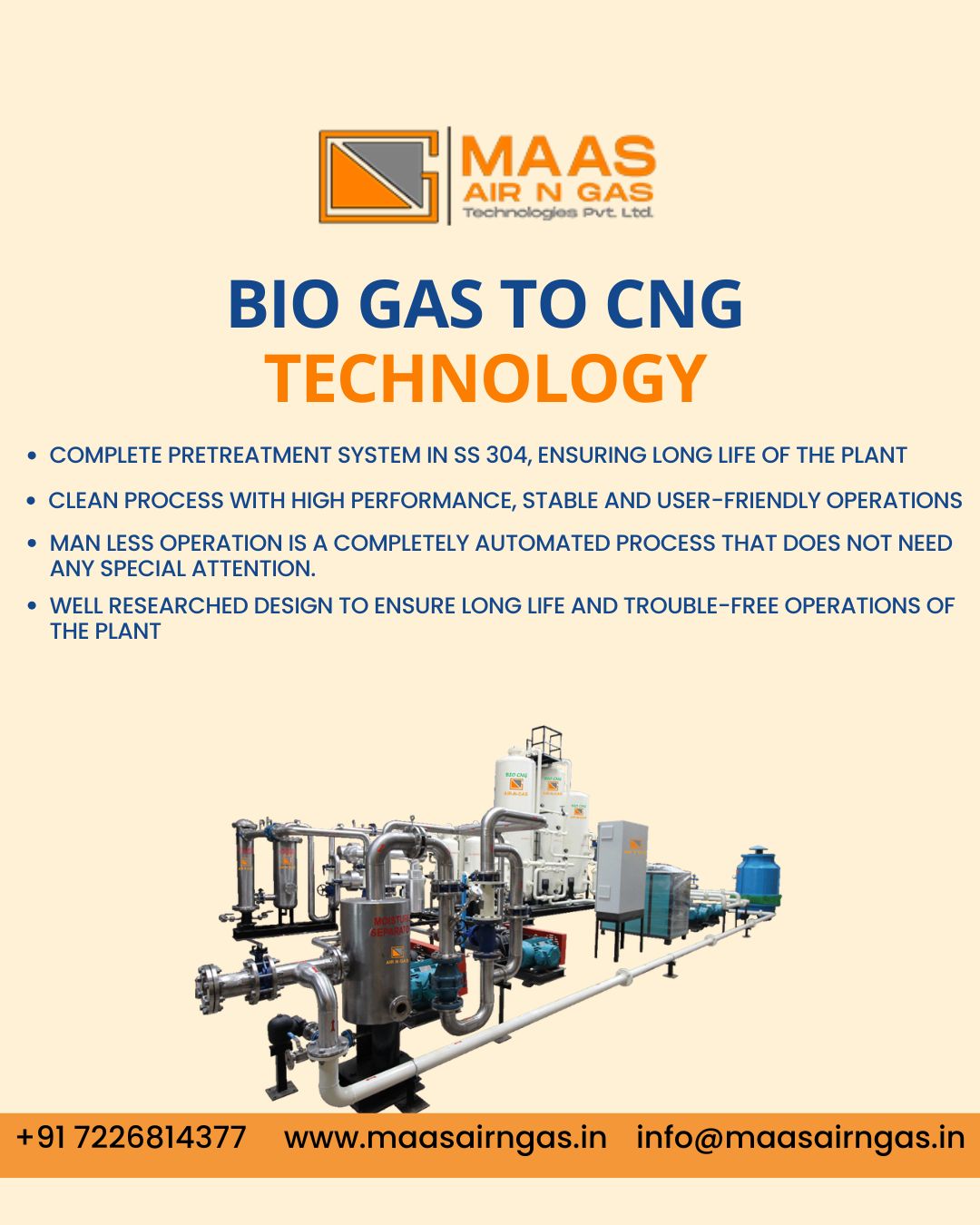
Introduction
Growing energy demands and increasing environmental concerns have accelerated the adoption of renewable fuel technologies across industries and transportation sectors. Among the most promising solutions is Bio Gas to CNG Technology, which converts organic waste into a high-quality fuel that can replace conventional fossil fuels.
The technology upgrades raw biogas by removing impurities such as carbon dioxide, moisture, and hydrogen sulfide, resulting in compressed biogas with properties similar to conventional compressed natural gas. This cleaner fuel can be used in vehicles, industrial operations, and power generation systems.
This article explores the working process, advantages, applications, and key considerations of Bio Gas to CNG Technology while highlighting its importance in sustainable energy development.
Table of Contents
| Sr. No. | Topics |
|---|---|
| 1 | Introduction to Bio Gas to CNG Technology |
| 2 | Understanding Biogas and Bio CNG |
| 3 | How the Technology Works |
| 4 | Key Features |
| 5 | Benefits of Bio CNG Production |
| 6 | Major Components of the System |
| 7 | Industrial and Commercial Applications |
| 8 | Environmental Advantages |
| 9 | Factors to Consider Before Installation |
| 10 | Future of Bio CNG Technology |
| 11 | Conclusion |
| 12 | FAQs |
Bio Gas to CNG Technology
Bio Gas to CNG Technology is an advanced process that upgrades biogas generated from organic waste into high-purity compressed biogas. The upgraded fuel can be used similarly to traditional CNG while offering environmental and economic benefits.
The technology supports waste management initiatives while creating a valuable renewable energy source from agricultural residues, food waste, municipal waste, and animal manure.
Understanding Biogas and Bio CNG
Biogas is produced through the anaerobic digestion of organic materials. It primarily contains methane and carbon dioxide along with traces of other gases.
Bio CNG is produced after upgrading and purifying biogas to increase methane concentration and improve fuel quality.
Difference Between Biogas and Bio CNG
| Parameter | Biogas | Bio CNG |
|---|---|---|
| Methane Content | Moderate | High |
| Energy Value | Lower | Higher |
| Storage | Limited | Compressed Storage |
| Fuel Quality | Raw Gas | Purified Fuel |
| Commercial Use | Limited | Wide Applications |
How the Technology Works
The conversion process involves several stages designed to improve gas quality and usability.
Biogas Collection
Organic waste undergoes anaerobic digestion, producing raw biogas.
Pretreatment Process
Moisture, dust, and harmful contaminants are removed to protect downstream equipment.
Gas Upgradation
Advanced purification systems remove carbon dioxide and other unwanted gases.
Compression Stage
The purified gas is compressed to achieve fuel-grade specifications.
Storage and Distribution
Compressed biogas is stored and supplied for industrial or transportation use.
Key Features
High-Performance Purification System
Designed to achieve consistent gas quality and improved methane concentration.
Automated Operations
Modern control systems support smooth and efficient plant performance.
Durable Construction
Quality materials help ensure long service life and dependable operation.
Energy-Efficient Design
Optimized systems reduce energy consumption during gas processing.
Low Maintenance Requirements
Simplified plant design contributes to reduced maintenance needs.
Reliable Fuel Production
Provides a stable source of renewable fuel throughout operations.
Benefits of Bio CNG Production
Renewable Energy Generation
Converts waste materials into a useful and sustainable energy source.
Waste Management Improvement
Supports effective disposal and utilization of organic waste.
Reduced Fuel Costs
Provides an alternative fuel source that can lower long-term energy expenses.
Lower Carbon Emissions
Contributes to cleaner energy production and environmental protection.
Energy Independence
Reduces dependence on conventional fossil fuels and external fuel supplies.
Major Components of the System
Biogas Digester
Generates biogas through the decomposition of organic matter.
Gas Pretreatment Unit
Removes moisture and contaminants from raw biogas.
Upgradation System
Enhances methane concentration by separating unwanted gases.
Compression Unit
Compresses purified gas for storage and utilization.
Storage Cylinders
Store compressed biogas safely for future use.
Control Panel
Monitors and manages overall plant operations.
Industrial and Commercial Applications
Bio CNG technology serves multiple sectors.
Transportation Sector
Used as a clean fuel alternative for CNG-powered vehicles.
Manufacturing Industries
Supports heating and process energy requirements.
Agricultural Sector
Utilizes farm waste while producing renewable fuel.
Food Processing Units
Converts organic waste into a valuable energy resource.
Municipal Waste Projects
Helps manage urban organic waste effectively.
Environmental Advantages
Reduction in Greenhouse Gas Emissions
Capturing methane from waste prevents harmful emissions from entering the atmosphere.
Sustainable Waste Utilization
Encourages productive use of biodegradable materials.
Cleaner Fuel Alternative
Produces a fuel source with lower environmental impact.
Circular Economy Support
Promotes resource recovery and sustainable development practices.
Factors to Consider Before Installation
Availability of Feedstock
A consistent supply of organic waste is essential for efficient operation.
Production Capacity Requirements
Plant size should match anticipated fuel demand.
Space Availability
Adequate installation and maintenance space should be considered.
Regulatory Compliance
Projects should meet applicable environmental and operational standards.
Future Expansion Plans
System scalability can support growing energy requirements.
Future of Bio CNG Technology
As industries and governments continue investing in renewable energy solutions, Bio Gas to CNG Technology is expected to play a significant role in sustainable fuel production. Increasing focus on waste-to-energy projects and carbon reduction initiatives is driving broader adoption across multiple sectors.
The ability to generate clean fuel while managing waste efficiently makes this technology a practical long-term solution for modern energy needs.
Conclusion
Bio Gas to CNG Technology provides an innovative approach to converting organic waste into a valuable renewable fuel. By upgrading biogas into high-quality compressed biogas, organizations can improve waste utilization, reduce environmental impact, and create sustainable energy resources.
With growing demand for cleaner fuels and efficient waste management solutions, Bio CNG systems continue to offer significant opportunities for industries, municipalities, and agricultural operations seeking long-term energy sustainability.
FAQs
What is Bio Gas to CNG Technology?
It is a process that upgrades raw biogas into high-quality compressed biogas suitable for fuel applications.
What materials are used to produce biogas?
Agricultural waste, food waste, animal manure, and organic municipal waste are commonly used.
How is Bio CNG different from conventional CNG?
Bio CNG is produced from renewable organic waste sources, while conventional CNG is derived from natural gas reserves.
Can Bio CNG be used in vehicles?
Yes, it can be used in CNG-compatible vehicles after meeting required fuel quality standards.
What are the benefits of Bio CNG production?
Benefits include renewable energy generation, waste management improvement, reduced emissions, and fuel cost savings.
Is the process environmentally friendly?
Yes, the technology supports sustainable waste utilization and helps reduce greenhouse gas emissions.
Which industries benefit from Bio CNG systems?
Transportation, manufacturing, agriculture, food processing, and municipal waste management sectors commonly utilize this technology.
Why is Bio CNG considered a sustainable fuel?
Because it is produced from renewable organic waste resources and supports circular economy practices.