
Bio Gas Dryer: 7 Powerful Benefits for Efficient Biogas Purification and Energy Production
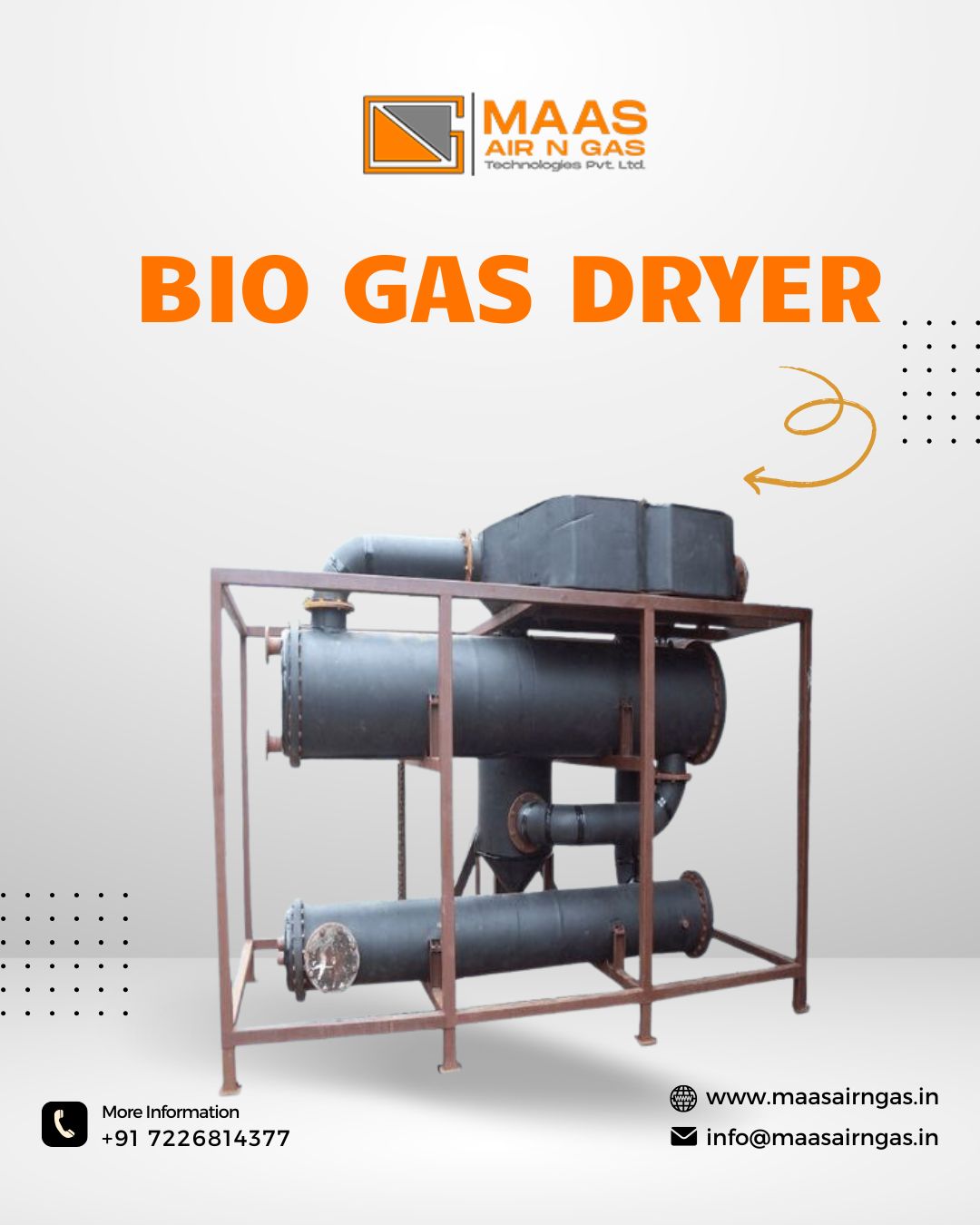
Bio Gas Dryer: Complete Guide to Moisture Removal in Biogas Systems
Table of Contents
- What is a Bio Gas Dryer?
- Why Moisture Removal is Essential in Biogas
- How a Bio Gas Dryer Works
- Benefits of Installing a Bio Gas Dryer
- Applications of Bio Gas Dryer Systems
- Why Choose MAAS Air N Gas for Bio Gas Dryer Solutions?
- Frequently Asked Questions (FAQs)
- Conclusion
Bio Gas Dryer: The Key to Efficient and Reliable Biogas Purification
Bio Gas Dryer technology has become an essential part of modern biogas purification systems. Biogas generated from organic waste, agricultural residues, food processing waste, municipal solid waste, and sewage treatment plants contains a significant amount of moisture. This moisture can create serious operational challenges if it is not removed before the gas is utilized for power generation, heating, or upgrading to biomethane.
The presence of water vapor in biogas can lead to corrosion, reduced equipment efficiency, blockage in pipelines, and increased maintenance costs. A Bio Gas Dryer effectively removes excess moisture from biogas streams, ensuring a cleaner, safer, and more efficient gas supply. As industries and governments across the world focus on renewable energy and sustainability, the demand for advanced biogas treatment equipment continues to grow.
According to the Government of India’s Sustainable Alternative Towards Affordable Transportation (SATAT) initiative, compressed biogas is expected to play a major role in the country’s clean energy future. For official information, visit the Ministry of Petroleum and Natural Gas: Ministry of Petroleum and Natural Gas
What is a Bio Gas Dryer?
A Bio Gas Dryer is a specialized system designed to remove moisture from raw biogas before it is used or processed further. During the anaerobic digestion process, organic matter breaks down and produces biogas containing methane, carbon dioxide, hydrogen sulfide, and water vapor.
The moisture content in raw biogas is naturally high because the gas is generated in a wet environment. If this moisture is not removed, condensation can occur inside pipelines and equipment, resulting in operational problems. A Bio Gas Dryer helps achieve optimal gas quality by reducing the dew point and preventing water-related damage.
Modern drying systems are engineered to provide efficient moisture removal while maintaining gas flow rates and minimizing energy consumption. This makes them an integral component of any biogas upgrading or purification plant.
Why Moisture Removal is Essential in Bio Gas Dryer Systems
Bio Gas Dryer Prevents Equipment Corrosion
Moisture combined with contaminants such as hydrogen sulfide forms acidic compounds that can corrode compressors, storage tanks, valves, and pipelines. Installing a Bio Gas Dryer significantly reduces this risk and extends equipment life.
Bio Gas Dryer Improves Gas Quality
A dry gas stream ensures better combustion efficiency and improves the performance of gas engines, boilers, and CHP units. High-quality gas also meets the requirements for upgrading biogas into biomethane.
Bio Gas Dryer Reduces Maintenance Costs
Water accumulation in pipelines often causes blockages and operational disruptions. By removing excess moisture, a Bio Gas Dryer reduces maintenance frequency and lowers operating expenses.
Bio Gas Dryer Enhances Safety
Condensation inside gas systems can create pressure fluctuations and operational instability. Effective moisture removal contributes to safer plant operation and more reliable gas delivery.
How a Bio Gas Dryer Works
The operating principle of a Bio Gas Dryer involves cooling, condensation, and moisture separation. As raw biogas enters the drying system, the temperature is reduced, causing water vapor to condense into liquid form. The condensed water is then separated and drained from the system.
Advanced drying technologies may include:
- Refrigeration-based drying
- Chilled water drying
- Condensation drying
- Adsorption drying
- Desiccant drying systems
The selection of a drying technology depends on factors such as gas flow rate, operating pressure, ambient conditions, and required moisture levels.
A properly designed Bio Gas Dryer ensures stable operation and consistent gas quality even under varying production conditions.
Benefits of Installing a Bio Gas Dryer
Increased Equipment Lifespan
One of the biggest advantages of a Bio Gas Dryer is the protection it provides to downstream equipment. Dry gas reduces corrosion and wear, helping organizations maximize the lifespan of critical assets.
Better Energy Efficiency
Dry biogas burns more efficiently and provides higher operational performance in generators and combustion systems. This translates into improved energy output and reduced fuel losses.
Improved Biomethane Production
For projects focused on compressed biogas (CBG) production, moisture removal is a mandatory purification step. A Bio Gas Dryer helps meet stringent gas quality standards required for commercial applications.
Reduced Downtime
By preventing condensation-related failures, drying systems contribute to uninterrupted plant operation and higher productivity.
Compliance with Industry Standards
Many industrial and commercial applications require biogas to meet specific moisture specifications. Installing a Bio Gas Dryer helps facilities comply with these requirements while maintaining operational reliability.
Applications of Bio Gas Dryer Systems
The use of Bio Gas Dryer technology is rapidly expanding across multiple industries and renewable energy projects.
Common applications include:
- Compressed Biogas (CBG) Plants
- Biomethane Upgrading Facilities
- Wastewater Treatment Plants
- Agricultural Biogas Projects
- Food Processing Industries
- Landfill Gas Recovery Systems
- Power Generation Plants
- Municipal Waste Management Facilities
As global demand for renewable energy increases, efficient gas drying systems are becoming indispensable for maintaining high-quality biogas production.
Why Choose MAAS Air N Gas for Bio Gas Dryer Solutions?
When investing in a Bio Gas Dryer, selecting the right technology partner is critical. MAAS Air N Gas specializes in advanced gas purification and drying solutions designed for industrial performance, durability, and efficiency.
Key reasons to choose MAAS Air N Gas include:
- Customized drying solutions
- High-efficiency moisture removal technology
- Robust industrial-grade construction
- Low maintenance requirements
- Reliable long-term performance
- Technical support and engineering expertise
For organizations seeking dependable biogas treatment equipment, MAAS Air N Gas delivers solutions that help improve gas quality, protect assets, and maximize operational efficiency.
Internal Link:
Explore advanced biogas purification solutions at Air N Gas Technologies Pvt Ltd
External DoFollow Resource:
For additional information on renewable biogas technologies and global sustainability initiatives, visit the International Energy Agency (IEA) Bioenergy
Frequently Asked Questions (FAQs)
What is a Bio Gas Dryer?
A Bio Gas Dryer is a system used to remove moisture from raw biogas to improve gas quality and protect equipment.
Why is moisture removal important in biogas systems?
Moisture can cause corrosion, blockages, efficiency losses, and increased maintenance costs. A Bio Gas Dryer eliminates these issues by reducing water vapor content.
Where is a Bio Gas Dryer used?
It is commonly used in CBG plants, biomethane upgrading facilities, wastewater treatment plants, agricultural biogas projects, and landfill gas recovery systems.
How does a Bio Gas Dryer improve energy efficiency?
Dry biogas burns more effectively, improving combustion efficiency and enhancing the performance of engines, boilers, and generators.
Can a Bio Gas Dryer help reduce maintenance costs?
Yes. By preventing condensation and corrosion, a Bio Gas Dryer minimizes equipment damage and lowers maintenance expenses.
Conclusion
A Bio Gas Dryer is one of the most important components in a modern biogas purification system. By removing excess moisture from biogas streams, it protects equipment, improves gas quality, enhances energy efficiency, and reduces maintenance costs. As industries continue to invest in renewable energy and sustainable fuel production, the role of Bio Gas Dryer technology will become even more significant.
Organizations looking to achieve reliable and efficient biogas processing should invest in high-quality drying solutions that deliver long-term operational benefits. With advanced engineering, dependable performance, and industry expertise, MAAS Air N Gas provides Bio Gas Dryer systems designed to meet the evolving needs of the renewable energy sector.