
Ammonia Cracker
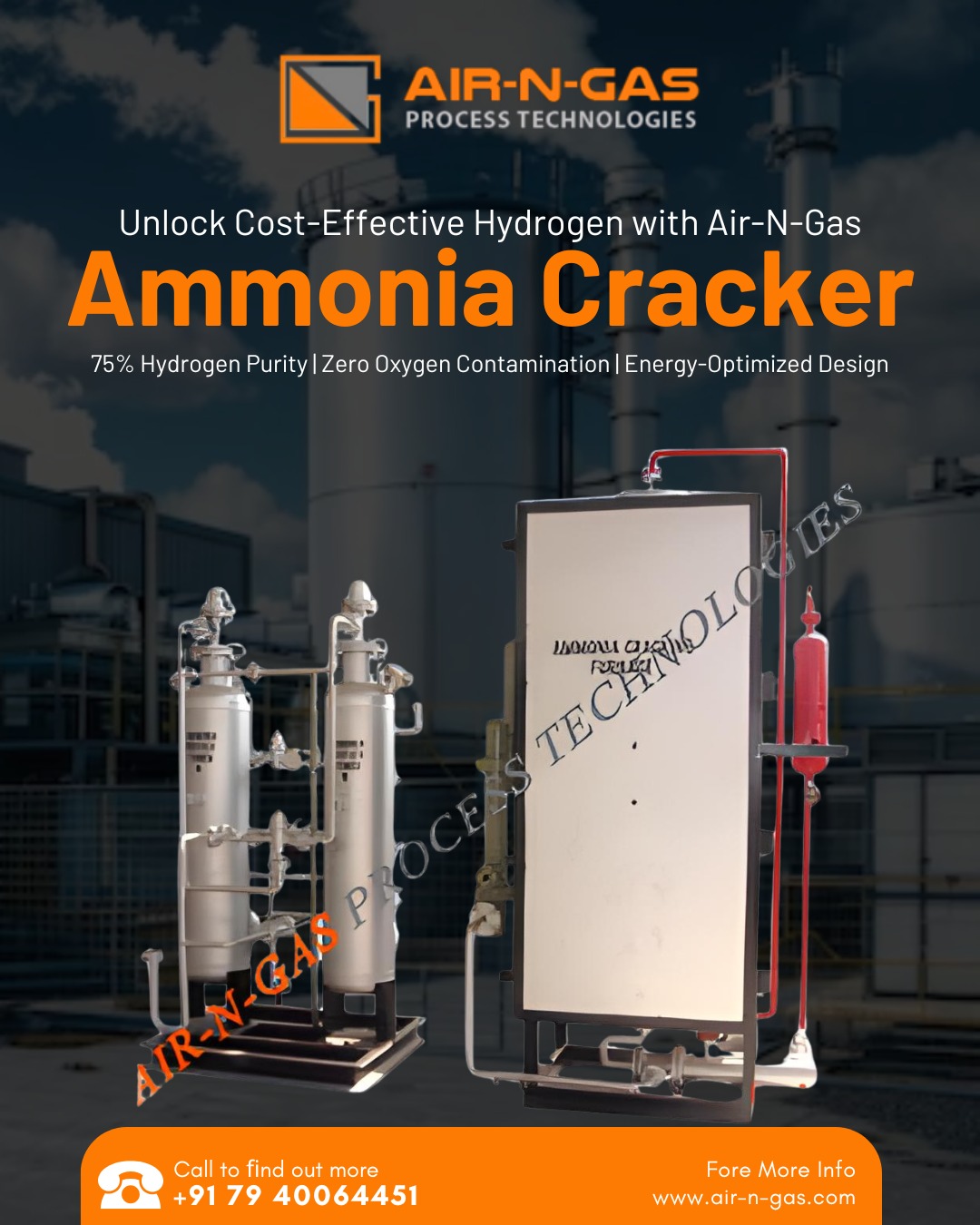
Unlocking the Power of Ammonia Cracker: The Future of Hydrogen Generation
Ammonia Cracker
Introduction to Ammonia Cracker
An Ammonia Cracker is a critical industrial system designed to generate hydrogen gas by decomposing ammonia (NH?) at elevated temperatures. With the increasing global demand for clean hydrogen fuel, the ammonia cracker has become a preferred technology due to its efficiency, cost-effectiveness, and simplicity in operation. This process is essential for industries ranging from metallurgy and electronics to fuel cells and semiconductor manufacturing.
Read Alao:
Heatless Air Dryer Manufacturer
PSA Nitrogen Plants
What is an Ammonia Cracker?
An Ammonia Cracker is a specialized system that facilitates the breakdown of ammonia into hydrogen and nitrogen gases. This is achieved through a high-temperature catalytic process, making it an efficient solution for on-site hydrogen generation. The system typically operates between 800°C to 950°C, using a nickel catalyst to enhance the decomposition rate and reduce energy consumption.
Hydrogen Generator through Ammonia Cracking
The hydrogen generator in an ammonia cracker works by using ammonia as a hydrogen-rich source. Ammonia, with its high hydrogen content (17.6% by weight), is an excellent medium for storing and transporting hydrogen. By cracking ammonia on demand, industries can generate high-purity hydrogen gas with minimal infrastructure and reduced cost compared to traditional water electrolysis or steam methane reforming..
This method is especially beneficial in remote or off-grid locations where hydrogen transport and storage are challenging. Using an ammonia cracker as a hydrogen generator ensures flexibility, safety, and scalability.
Ammonia Decomposition: The Science Behind It
Ammonia decomposition is the chemical process that occurs inside an ammonia cracker. The primary reaction involved is:
This endothermic reaction absorbs heat, requiring continuous thermal input to maintain the high reaction temperature. The presence of a nickel catalyst significantly enhances the reaction rate and efficiency, enabling rapid and complete decomposition of ammonia molecules into hydrogen and nitrogen.
This decomposition is environmentally friendly, emitting zero carbon dioxide, making it a preferred method for clean hydrogen production.
The Role of an Ammonia Reformer
While similar in function, an ammonia reformer differs slightly from a standard cracker. Ammonia reformers are often used in more complex setups, such as fuel cell systems or hydrogen fueling stations, where precise control over temperature, pressure, and gas purity is essential.
In both systems, the goal remains the same—hydrogen extraction via ammonia cracking—but reformers often include advanced components like gas purifiers, pressure regulators, and heat exchangers for enhanced control and output quality.
Understanding Ammonia Dissociation
Ammonia dissociation is another term used to describe the same process of ammonia cracking. The terms dissociation, decomposition, and cracking are often used interchangeably in industrial applications. In this context, dissociation refers to the molecular breakdown of ammonia into its base elements hydrogen and nitrogen under high heat and catalytic influence.
This dissociation is crucial for achieving low-oxygen and low-humidity hydrogen environments, often necessary in semiconductor and furnace operations.
Nickel Catalyst: The Heart of Ammonia Cracker
The nickel catalyst plays a pivotal role in ammonia crackers by speeding up the decomposition process without being consumed. Nickel-based catalysts are highly efficient, cost-effective, and resistant to degradation at high temperatures..
The catalyst provides an active surface for ammonia molecules to break apart more easily, facilitating the hydrogen and nitrogen release while keeping the system energy-efficient. Modern ammonia crackers are often optimized with advanced nickel alloy coatings to ensure long-term durability and performance.
High-Temperature Catalysis and Its Importance
The ammonia cracking process depends heavily on high-temperature catalysis. Since the reaction is endothermic, it requires continuous external heating. Typically, electric heaters or gas burners are used to raise the system temperature above 800°C, where the nickel catalyst becomes active.
High-temperature catalysis ensures the reaction proceeds rapidly and completely, producing high-purity hydrogen suitable for industrial applications. Proper insulation and thermal control are critical to prevent heat loss and maintain operational efficiency.
The Endothermic Reaction Behind Ammonia Splitting
The endothermic reaction at the core of ammonia cracking absorbs significant heat from its surroundings. This property defines the need for high-temperature conditions and constant thermal management. The energy absorbed during the ammonia splitting process facilitates the breakage of nitrogen-hydrogen bonds, allowing hydrogen to be separated and collected efficiently.
Industrial systems often integrate energy recovery mechanisms to reclaim and reuse heat, improving overall energy efficiency and lowering operational costs.
Ammonia Splitting: Clean Hydrogen for a Greener Future
Ammonia splitting, or cracking, is gaining attention as a green hydrogen technology. As the world shifts toward decarbonization, ammonia serves as an ideal carrier for hydrogen, thanks to its ease of storage and transportation. Cracking ammonia at the point of use allows industries to generate clean, on-demand hydrogen with zero carbon emissions.
Ammonia cracker systems are now being deployed in hydrogen refueling stations, power plants, and remote industrial setups where sustainable and reliable hydrogen generation is essential.
Conclusion: Why the Ammonia Cracker Matters
The Ammonia Cracker is not just a piece of industrial equipment—it’s a gateway to clean energy, sustainability, and innovation. By leveraging technologies like ammonia decomposition, high-temperature catalysis, and nickel catalyst systems, industries can generate cost-effective and eco-friendly hydrogen.
From fuel cells to furnaces, and from metallurgy to electronics, the ammonia cracker is proving its worth across multiple domains. As the hydrogen economy expands, ammonia crackers will be at the heart of this transformation.
FAQs on Ammonia Cracker
- What is the purpose of an ammonia cracker?
- To break down ammonia into hydrogen and nitrogen gases for industrial hydrogen generation.
- How does a nickel catalyst work in an ammonia cracker?
- It speeds up ammonia decomposition by lowering the energy barrier of the reaction.
- Is ammonia cracking a sustainable method for hydrogen generation?
- Yes, it's a zero-emission, energy-efficient process ideal for clean hydrogen production.
- What temperature is required for ammonia decomposition?
- Typically between 800°C and 950°C depending on the catalyst and system design.
- Can ammonia crackers be used in hydrogen fuel stations?
- Yes, they're increasingly deployed for on-site hydrogen generation in refueling stations.